In the face of the next emergency situation, what should drivers do that circulates in their vicinity?
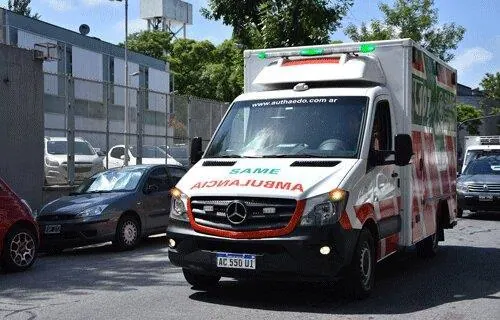
Question and answers
In the face of the next emergency situation, what should drivers do that circulates in their vicinity?
- Increase the speed to not be an obstacle to this vehicle.
- Warn other drivers of the presence of this vehicle, repeatedly using the horn.
- Give way to this vehicle, clear the emergency lane and if necessary stop. ✓ correct
As in the exam (Spanish)
Frente a la siguiente situación de emergencia, ¿qué deben hacer los conductores que circulen en su proximidad?
- Aumentar la velocidad para no ser un obstáculo a este vehículo.
- Avisar a otros conductores de la presencia de este vehículo, usando repetidamente la bocina.
- Dar lugar a este vehículo, despejar el carril de emergencias y si fuera necesario detenerse. ✓
Correct answer: “Give way to this vehicle, clear the emergency lane and if necessary stop.” (in the exam: “Dar lugar a este vehículo, despejar el carril de emergencias y si fuera necesario detenerse.”).
The question is part of the official Buenos Aires City theory test for classes B and A, topic “Crashes and emergencies”. It will be in Spanish, so learn the original wording too.
Practise this topic 40-question mock exam
More questions on “Crashes and emergencies”
- The following symbol indicates that this is a lane which must be released when an emergency vehicle approaches.
- In the face of the next emergency situation, which sector should vehicles be removed from the image in order to facilitate passage to the ambulance?
- In the face of the next emergency situation, which sector should vehicles be removed from the image in order to facilitate passage to the ambulance?
- In a tunnel, with both directions of circulation, is it allowed to surpass a vehicle?
- Circular at constant speed and within the limits set by law, in addition to minimizing the chances of causing a road accident, can optimize fuel consumption in a vehicle.
- Circulating the precautionary procedure at a faster rate means that there is an increased likelihood of a more serious road accident.
- Is this type of sign valid?
- According to Act No. 2148, a vehicle which is not intended for emergency service, in case of extreme need, can it perform a service similar to that performed by the latter?
Questions and answers come from the City of Buenos Aires official “Preguntas de examen” collections (classes A and B, based on the Manual del Conductor). Translation by LifeArg; only the Spanish text counts in the exam.