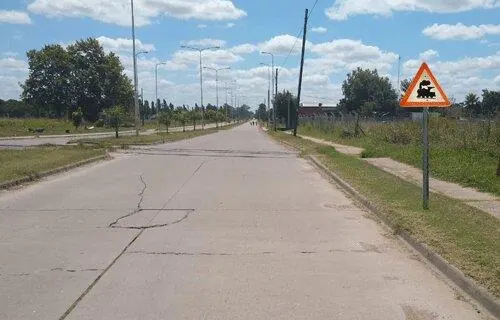
If the en-route traffic encounters this signal, what conduct should it follow?
Question and answers
If the en-route traffic encounters this signal, what conduct should it follow?
- The speed should be reduced and attention paid to the possible approach of trains. ✓ correct
- It continues at the same speed, unless the approach of the train is effective.
- The rest of the drivers are indicated, caution on the approach of trains, placing beacons.
As in the exam (Spanish)
Si al circular en ruta se encuentra con esta señal, ¿qué conducta debe seguir?
- Se debe disminuir la velocidad y prestar atención a la posible aproximación de trenes. ✓
- Se continúa con la misma velocidad, salvo que se haga efectiva la aproximación del tren.
- Se indica al resto de los conductores, la precaución sobre la aproximación de trenes, colocando balizas.
Correct answer: “The speed should be reduced and attention paid to the possible approach of trains.” (in the exam: “Se debe disminuir la velocidad y prestar atención a la posible aproximación de trenes.”).
The question is part of the official Buenos Aires City theory test for classes B and A, topic “Lights and signals”. It will be in Spanish, so learn the original wording too.
Practise this topic 40-question mock exam
More questions on “Lights and signals”
- If the vehicle that precedes it is moving with these flashing lights on, what could the driver be indicating?
- What does the use of this type of light indicate?
- If the vehicle in the image is ready to enter a garage, it is anticipating its maneuver, using the correct lights.
- If the vehicle in the image is ready to enter a garage located on your right, you are anticipating your maneuver using the correct lights.
- The vehicle, marked with a red circle, circulates using the correct lights.
- To circulate at night on a street in the City of Buenos Aires, what lights should be used?
- When observing the lights of this vehicle, what significance do they have in terms of the sense of circulation?
- What are these flashing lights for?
Questions and answers come from the City of Buenos Aires official “Preguntas de examen” collections (classes A and B, based on the Manual del Conductor). Translation by LifeArg; only the Spanish text counts in the exam.