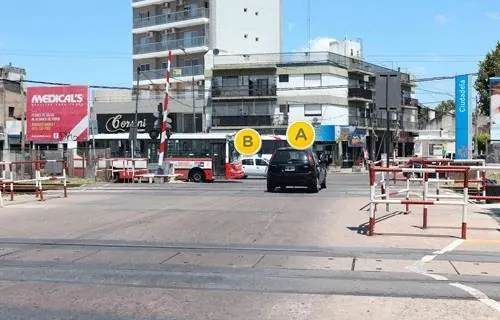
At a crossing of two streets without traffic lights, in front of the next situation, who has priority of passage?
Question and answers
At a crossing of two streets without traffic lights, in front of the next situation, who has priority of passage?
- Vehicle A, as it is running on the right
- The B vehicles, as there are several that circulate on that street.
- Vehicle A, as it is coming out of the rail crossing. ✓ correct
As in the exam (Spanish)
En un cruce de dos calles sin semáforo, frente a la siguiente situación, ¿quién tiene prioridad de paso?
- El vehículo A, ya que está circulando por la derecha
- Los vehículos B, ya que son varios los que circulan por esa calle.
- El vehículo A, ya que está saliendo del paso a nivel ferroviario. ✓
Correct answer: “Vehicle A, as it is coming out of the rail crossing.” (in the exam: “El vehículo A, ya que está saliendo del paso a nivel ferroviario.”).
The question is part of the official Buenos Aires City theory test for classes B and A, topic “Right of way and intersections”. It will be in Spanish, so learn the original wording too.
Practise this topic 40-question mock exam
More questions on “Right of way and intersections”
- At a crossing of two streets without traffic lights, in front of the next situation, who has priority of passage?
- Who has priority passage at the crossing of these two streets?
- Who has priority passage at the crossing of these two streets?
- Which vehicle has priority passage at this intersection without a traffic light?
- When driving a vehicle and arriving at this intersection, how should it proceed in front of this signal?
- These signals are the only ones that indicate that you miss the priority of passage in a street mouth without traffic light.
- According to Law No. 2148, at crossroads without traffic lights, what is the order of priority of passage according to the type of artery?
- As a general rule, who has priority of passage at a crossroads without traffic lights?
Questions and answers come from the City of Buenos Aires official “Preguntas de examen” collections (classes A and B, based on the Manual del Conductor). Translation by LifeArg; only the Spanish text counts in the exam.