Right of way and intersections: Argentina driving test questions
50 official Buenos Aires exam questions on “Right of way and intersections” with correct answers, the Spanish original and an English translation. A short rules summary and topic practice.
The rules in brief
The core Argentine rule: the vehicle approaching from the right has priority (prioridad de paso a la derecha) unless signs or lights say otherwise. Pedestrians on a crossing and emergency vehicles with sirens always go first.
Slow down before every intersection even when you have priority, never enter a junction you cannot clear, and when turning give way to pedestrians crossing the street you turn into.
All questions with answers (50)
-
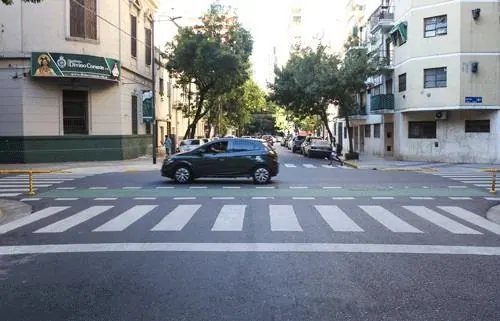 If you intend to cross this intersection, which side should you look at?Si usted pretende cruzar esta intersección, ¿hacia qué lado debe mirar?
✅ To both sides. · class BA
-
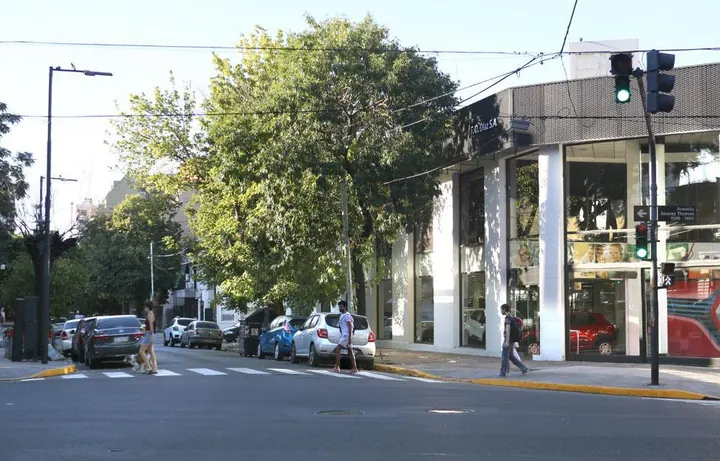 How should it proceed, if at this intersection you want to continue in a straight line?¿Cómo debe proceder, si al llegar a esta intersección, se desea continuar en línea recta?
✅ Stop the vehicle so that the pedestrian ends crossing and, before moving forward, make visual contact with pedestrians who have not yet begun crossing, even though I know that for a moment I will obstruct the street mouth. · class BA
-
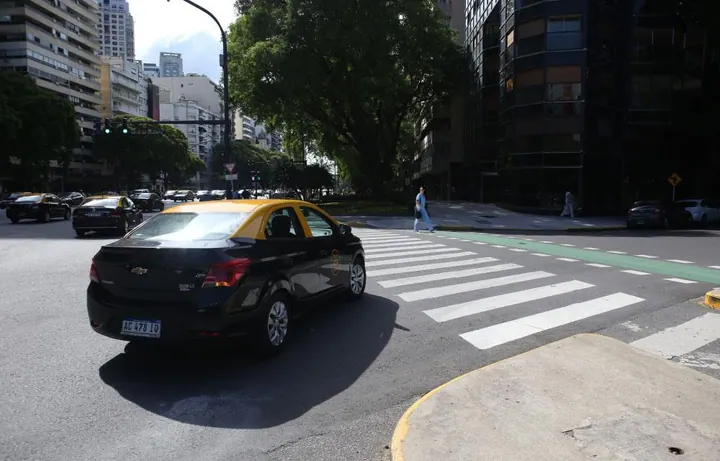 At this intersection, who has priority passage?En esta intersección, ¿quién tiene prioridad de paso?
✅ The pedestrian. · class BA
-
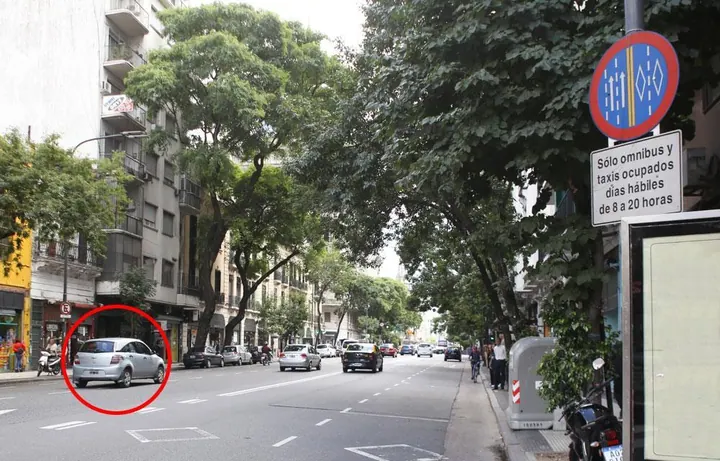 The car signposted with a red circle, is it allowed to turn right at the next junction?El auto señalizado con un círculo rojo, ¿tiene permitido girar a la derecha en el próximo cruce?
✅ Only if you do it outside of the exclusive lane restriction schedule. · class BA
-
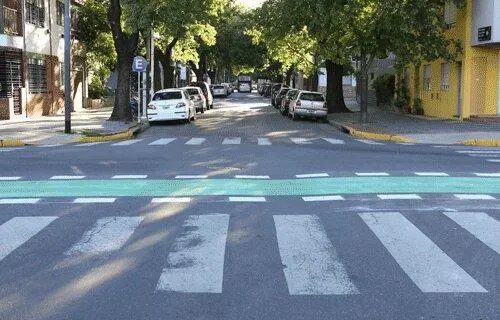 What does the next green cross at intersections indicate?¿Qué indica el siguiente cruce verde en las intersecciones?
✅ It warns drivers of the existence of a crossover point for cycle or bike paths. · class BA
-
If a fault is found, can a transit agent retain the driver's license?En caso de comprobar una falta, ¿puede un agente de tránsito retener la licencia de conducir?
✅ Only in cases where the current regulations so indicate. · class BA
-
Indicate the order of policy priority to be respected (from higher to lower hierarchy):Indique el orden de prioridad normativo que debe respetar (de mayor a menor jerarquía):
✅ Indications from the competent authority; Signaling; General legal rules. · class BA
-
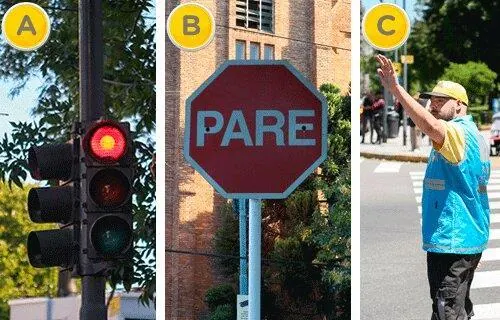 If you arrive at one crossing, which of these three signs has a normative priority over the others?Si al llegar a un cruce se presentan estas 3 señales, ¿cuál de ellas tiene prioridad normativa por sobre las demás?
✅ Option C. · class BA
-
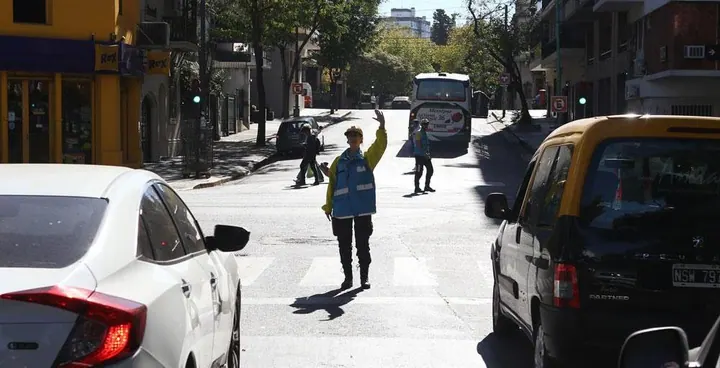 As a driver, what should he do in the face of the next situation?Como conductor, ¿qué debe realizar frente a la siguiente situación?
✅ Stop and wait for the indication of the transit agent to move forward. · class BA
-
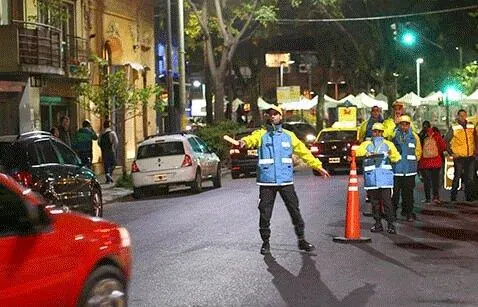 What is the traffic agent indicating when making this signal to a driver?¿Qué está indicando el agente de tránsito al realizar esta señal a un conductor?
✅ Stop the vehicle. · class BA
-
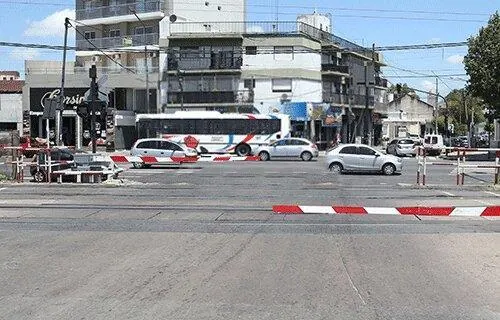 If you find yourself in this situation and the railway staff tell you to move forward, what should you do?Si se encuentra en esta situación y el personal ferroviario le indica que avance, ¿qué debe hacer?
✅ Advance because railway personnel are authorized to regulate the passage of vehicles. · class BA
-
Transitional signage is a regulatory priority over traffic lights, if it changes the normal road use regime.La señalización transitoria se encuentra como prioridad normativa sobre los semáforos, si es que modifica el régimen normal de uso de la vía.
✅ True. · class BA
-
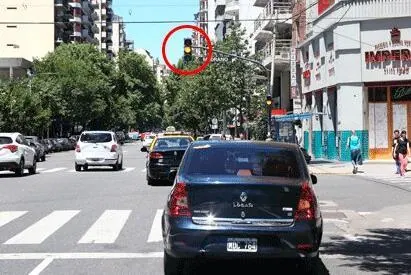 If a vehicle is at an intersection with this intermittent signaling, what attitude should it take?Si al conducir un vehículo se encuentra en una intersección con esta señalización intermitente, ¿qué actitud debe tomar?
✅ Do the crossing with utmost caution. · class BA
-
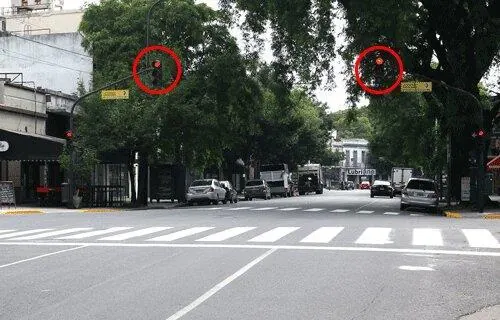 If a vehicle is at an intersection with this intermittent signaling, what attitude should it take?Si al conducir un vehículo se encuentra en una intersección con esta señalización intermitente, ¿qué actitud debe tomar?
✅ Stop the march and cross when it is certain that there is no risk. · class BA
-
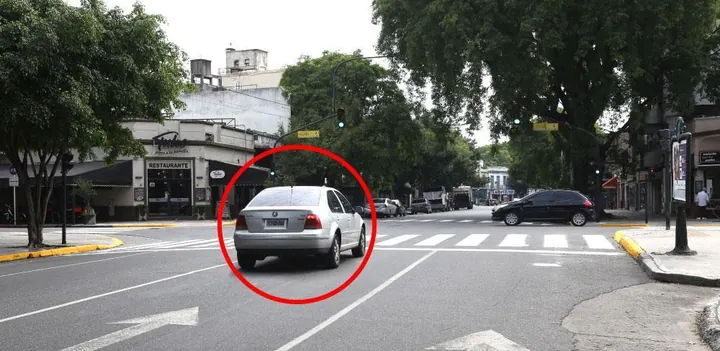 Faced with this situation, what should the driver of the vehicle indicated with the red circle do?Frente a esta situación, ¿qué debe hacer el conductor del vehículo señalado con el círculo rojo?
✅ Do not start the crossing until the other vehicle has completed yours. · class BA
-
When a traffic light changes from red to green, it is enabling you to restart; however, what precautions should be taken?Cuando un semáforo cambia de luz roja a verde, está habilitando a reiniciar la marcha; no obstante ello, ¿qué precauciones se deben adoptar?
✅ Both answers, A and B, are correct. · class BA
-
In horizontal marking, what is meant by “islet”?En materia de señalamiento horizontal, ¿qué se entiende por “isleta”?
✅ They're the traffic channeling marks. It cannot be passed or circulated over them. · class BA
-
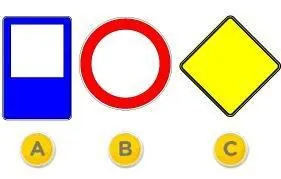 Which of the following images, by shape and color, corresponds to the signal indicative of a roundabout or steep slope?¿Cuál de las siguientes imágenes, por forma y color, corresponde a la señal indicativa de una rotonda o pendiente pronunciada?
✅ Figure C. · class BA
-
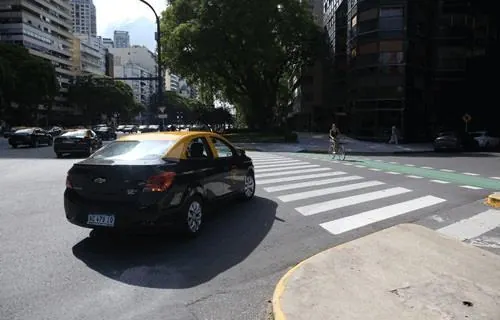 At this intersection without traffic lights, where the driver of the vehicle makes a right turn, who has priority of passage?En esta intersección sin semáforos, donde el conductor del vehículo realiza un giro a la derecha, ¿quién tiene prioridad de paso?
✅ The cyclist, because the car loses priority by wanting to turn. · class BA
-
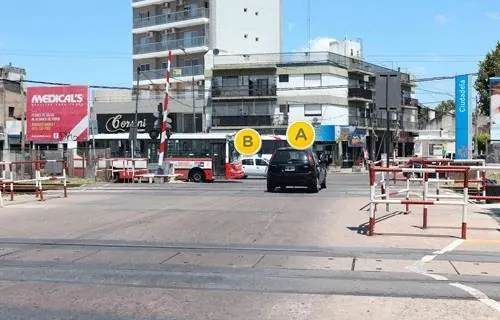 At a crossing of two streets without traffic lights, in front of the next situation, who has priority of passage?En un cruce de dos calles sin semáforo, frente a la siguiente situación, ¿quién tiene prioridad de paso?
✅ Vehicle A, as it is coming out of the rail crossing. · class BA
-
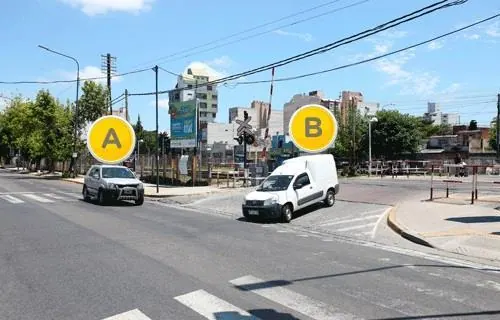 At a crossing of two streets without traffic lights, in front of the next situation, who has priority of passage?En un cruce de dos calles sin semáforo, frente a la siguiente situación, ¿quién tiene prioridad de paso?
✅ Vehicle B. · class BA
-
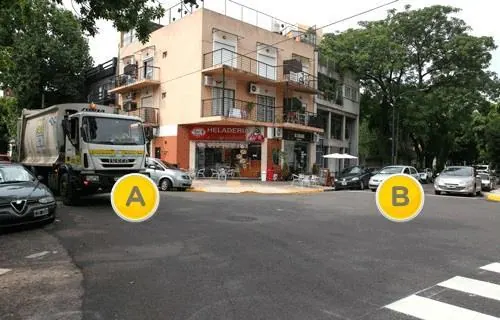 Who has priority passage at the crossing of these two streets?¿Quién tiene prioridad de paso en el cruce de estas dos calles?
✅ Vehicles running on A Street. · class BA
-
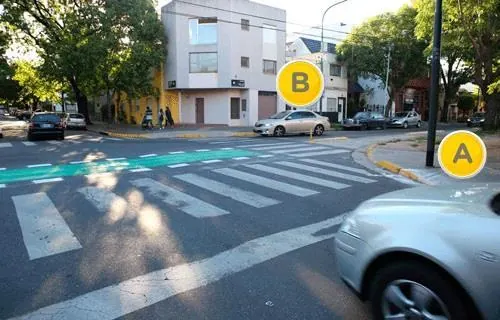 Who has priority passage at the crossing of these two streets?¿Quién tiene prioridad de paso en el cruce de estas dos calles?
✅ Vehicle B. · class BA
-
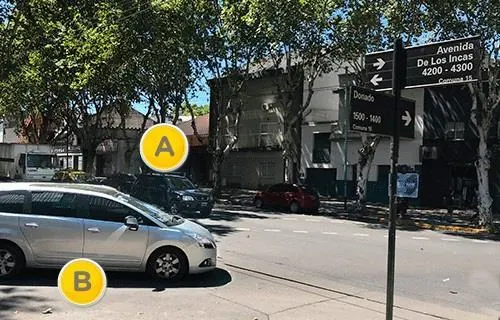 Which vehicle has priority passage at this intersection without a traffic light?¿Qué vehículo tiene prioridad de paso en esta intersección sin semáforo?
✅ Vehicle A because it's driving down an avenue. · class BA
-
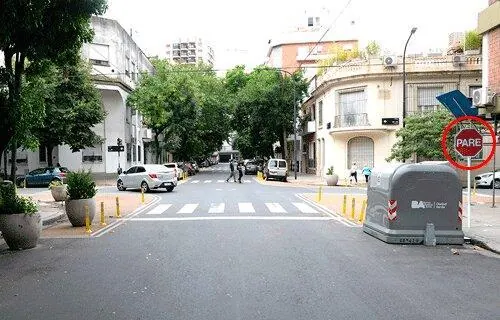 When driving a vehicle and arriving at this intersection, how should it proceed in front of this signal?Al conducir un vehículo y llegar a esta intersección, ¿cómo debe proceder frente a esta señal?
✅ Slow down and stop the vehicle before the pedestrian path. · class BA
-
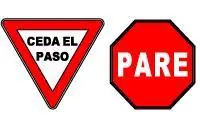 These signals are the only ones that indicate that you miss the priority of passage in a street mouth without traffic light.Estas señales son las únicas que indican que se pierde la prioridad de paso en una bocacalle sin semáforo.
✅ True. · class BA
-
According to Law No. 2148, at crossroads without traffic lights, what is the order of priority of passage according to the type of artery?De acuerdo a la Ley N° 2148, en encrucijadas sin semáforos, ¿cuál es el orden de prioridad de paso según el tipo de arteria?
✅ 1st Avenue - 2nd Street - 3rd Passage. · class BA
-
As a general rule, who has priority of passage at a crossroads without traffic lights?Como norma de carácter general, ¿quién tiene prioridad de paso en una encrucijada sin semáforos?
✅ The vehicle presented from the right side. · class BA
-
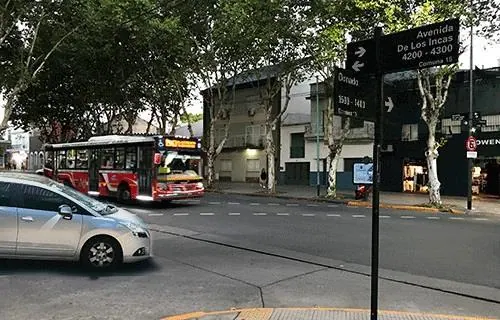 In the next situation, who is given priority in passing?En la siguiente situación, ¿a quién le corresponde la prioridad de paso?
✅ The bus. · class BA
-
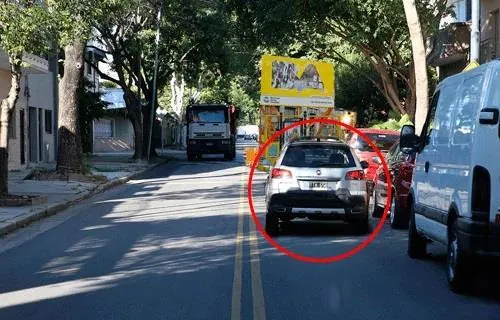 In the face of this obstruction situation, what should the driver of the vehicle be doing?Frente a esta situación de obstrucción de vía, ¿qué debe hacer el conductor del vehículo señalado?
✅ You must give way to the vehicle moving in the opposite direction. · class BA
-
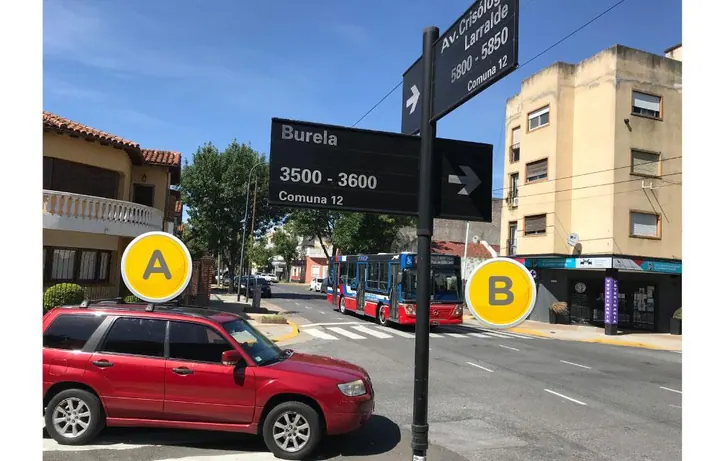 In the next situation, who is given priority in passing?En la siguiente situación, ¿a quién le corresponde la prioridad de paso?
✅ To vehicle B, as it runs along an avenue. · class BA
-
Who's got priority passage in a roundabout?¿Quién tiene prioridad de paso en una rotonda?
✅ The vehicle inside the circular driveway. · class BA
-
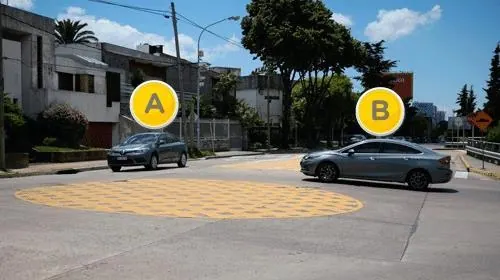 In this situation, where there is a circular road, who has the priority of passage?En esta situación, donde hay una calzada circular, ¿quién tiene la prioridad de paso?
✅ Vehicle B. · class BA
-
As a general rule, in a double-circulation artery, with steep slope and width that does not allow the simultaneous circulation of two vehicles, who has the priority of passage?Como norma general, en una arteria de doble circulación, con pendiente pronunciada y con un ancho que no permite la circulación simultánea de dos vehículos, ¿quién tiene la prioridad de paso?
✅ The vehicle that ascends. · class BA
-
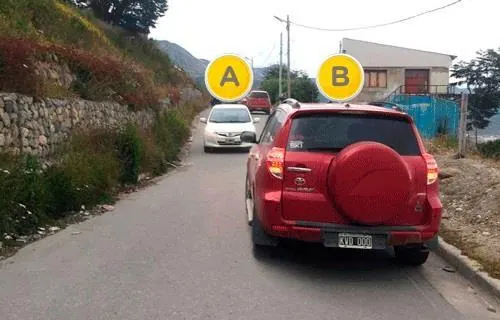 On this narrow slope, which of the two vehicles has priority passage?En esta pendiente estrecha, ¿cuál de los dos vehículos tiene prioridad de paso?
✅ Vehicle B. · class BA
-
When should the passage be given to vehicles wishing to enter the transit from the place where they were parked or from a garage?¿Cuándo se debe ceder el paso a los vehículos que desean incorporarse al tránsito desde el lugar donde estaban estacionados o desde un garaje?
✅ When transit is interrupted for any reason. · class BA
-
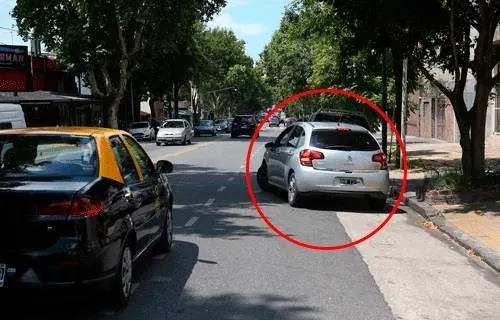 The signposted vehicle wants to get into traffic, does it have priority of passage over the other vehicles that are circulating through this artery?El vehículo señalizado quiere incorporarse al tránsito, ¿tiene prioridad de paso sobre los otros vehículos que están circulando por esta arteria?
✅ No, because the artery vehicles, which are intended to enter, are circulating. · class BA
-
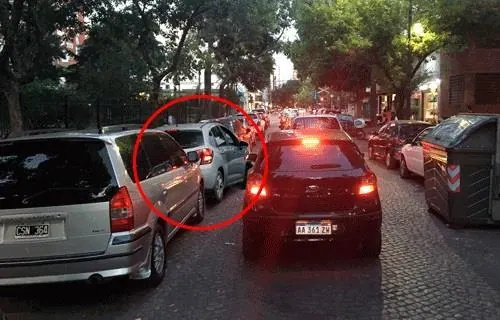 Does the signposted vehicle want to enter traffic, has it priority of passage over other vehicles that are detained in the artery?El vehículo señalizado quiere incorporarse al tránsito, ¿tiene prioridad de paso sobre los otros vehículos que están detenidos en la arteria?
✅ Yes, because traffic is under arrest and you must give way. · class BA
-
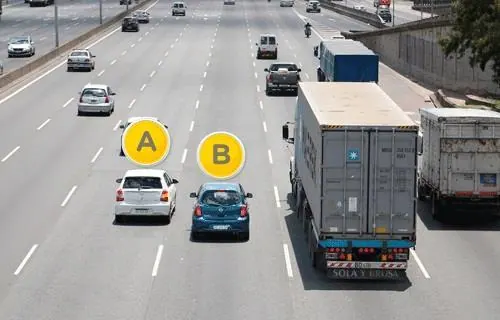 Vehicle A aims to change lanes to its right, which of the two vehicles has priority?El vehículo A pretende cambiar de carril hacia su derecha, ¿cuál de los dos vehículos tiene prioridad?
✅ Vehicle B. · class BA
-
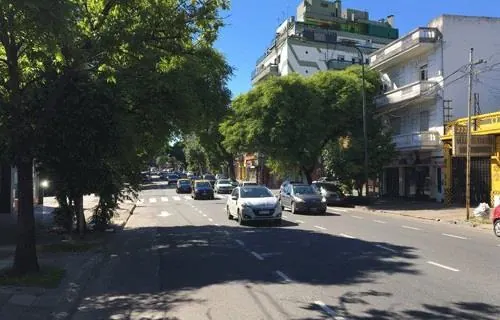 In this type of artery, who has priority when you want to make a lane change?En este tipo de arteria, ¿quién tiene prioridad cuando se desea realizar un cambio de carril?
✅ The vehicle passing through the lane intended to be occupied. · class BA
-
When several vehicles run encolumnados, which one of them has priority for overpassing?Cuando varios vehículos circulan encolumnados, ¿cuál de ellos tiene prioridad para realizar el sobrepaso?
✅ The one that circulates closest to the vehicle that you want to exceed. · class BA
-
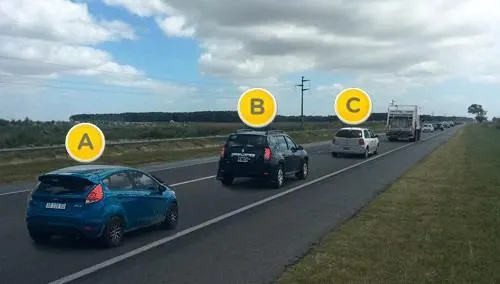 In this situation, who has priority to overpass the truck?En esta situación, ¿quién tiene prioridad para realizar el sobrepaso al camión?
✅ Vehicle C. · class BA
-
If you arrive at an intersection without traffic lights, you find that the vehicle in front of you is stopped waiting to turn left, what should you do if you want to continue in a straight line?Si al llegar a una intersección sin semáforos, se encuentra que el vehículo que está delante suyo está detenido esperando poder doblar hacia la izquierda, ¿qué debe hacer si ud. desea continuar en línea recta?
✅ Overpass it on the right safely, placing turning light and observing through rearview mirrors. · class BA
-
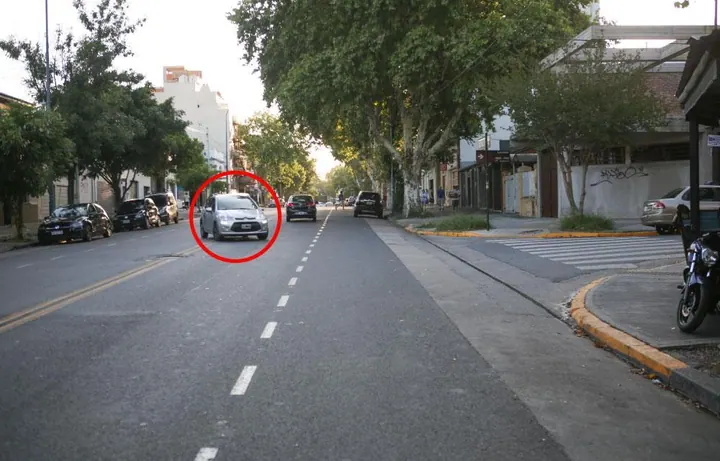 The signposted vehicle is allowed to turn left at this junction that has no traffic light.El vehículo señalizado tiene permitido girar a la izquierda en este cruce que no tiene semáforo.
✅ False. · class BA
-
You come running through an Av. de Doble Mano and when you reach the street, you need to turn left to take a unique street. According to Law No. 2148, under what conditions can you make such a move?Ud. viene circulando por una avenida de doble mano y al llegar a la bocacalle, precisa girar a la izquierda para tomar una calle de único sentido. De acuerdo a la Ley Nº 2148, ¿en qué condiciones puede efectuar esa maniobra?
✅ Both answers, A and B, are correct. · class BA
-
At a junction without traffic lights, a vehicle that is circulating on an Av. Doble Mano is allowed to turn left to take a single-way street.En un cruce sin semáforos, un vehículo que se encuentra circulando por una avenida doble mano, tiene permitido girar a su izquierda para tomar una calle de único sentido.
✅ True. · class BA
-
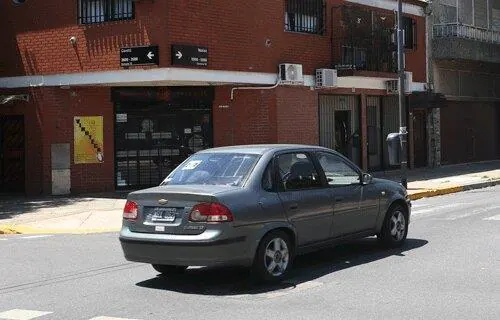 At this crossing of two streets without traffic lights, what is the upper limit of the precautionary speed established by law?En este cruce de dos calles sin semáforos, ¿cuál es el límite superior de la velocidad precautoria establecida por ley?
✅ 30 kilometers per hour. · class BA
-
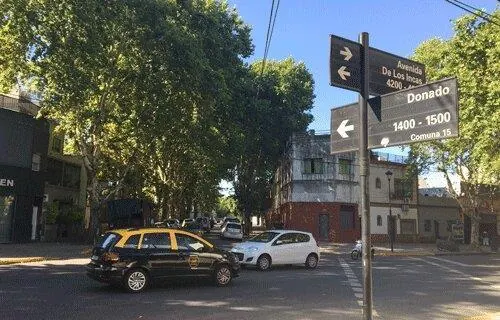 The vehicles that travel along the next avenue, when arriving at this street without traffic lights, what is the upper limit of precautionary speed that they must respect?Los vehículos que circulan por la siguiente avenida, al llegar a esta bocacalle sin semáforos, ¿cuál es el límite superior de velocidad precautoria que deben respetar?
✅ 40 kilometers per hour. · class BA
-
If you are driving and will turn as you arrive at an intersection, you should anticipate your maneuver using the corresponding turning light at least...Si usted está conduciendo y va a girar al llegar a una intersección, debe anticipar su maniobra utilizando la luz de giro correspondiente por lo menos...
✅ 30 meters before performing the maneuver. · class BA
-
To correctly perform a twist at an intersection you must indicate...Para realizar correctamente un giro en una intersección se debe indicar...
✅ Using the turning light on the corresponding side, at least 30 meters before. · class BA
Other topics
- Road signs and markings72
- Speed and following distance48
- Stopping and parking31
- Lanes, overtaking and manoeuvres35
- Alcohol, fatigue and phones37
- Seat belts, helmets and children19
- Lights and signals25
- Pedestrians, cyclists and scooters37
- Documents, insurance and fines36
- Crashes and emergencies32
- The vehicle and maintenance25
- Motorcycles (class A)97
- Safe driving60
Questions and answers come from the City of Buenos Aires official “Preguntas de examen” collections (classes A and B, based on the Manual del Conductor). Translation by LifeArg; only the Spanish text counts in the exam.