In this type of artery, who has priority when you want to make a lane change?
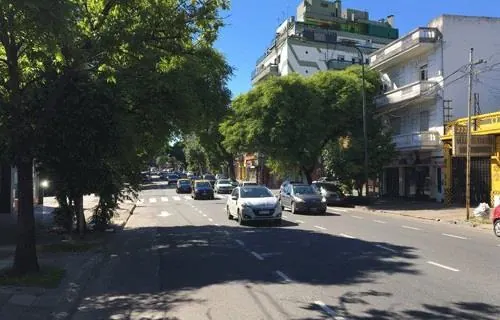
Question and answers
In this type of artery, who has priority when you want to make a lane change?
- The vehicle passing through the lane intended to be occupied. ✓ correct
- The vehicle making the lane change.
- The slowest lane vehicle.
As in the exam (Spanish)
En este tipo de arteria, ¿quién tiene prioridad cuando se desea realizar un cambio de carril?
- El vehículo que circula por el carril que se pretende ocupar. ✓
- El vehículo que realiza el cambio de carril.
- El vehículo del carril más lento.
Correct answer: “The vehicle passing through the lane intended to be occupied.” (in the exam: “El vehículo que circula por el carril que se pretende ocupar.”).
The question is part of the official Buenos Aires City theory test for classes B and A, topic “Right of way and intersections”. It will be in Spanish, so learn the original wording too.
Practise this topic 40-question mock exam
More questions on “Right of way and intersections”
- When several vehicles run encolumnados, which one of them has priority for overpassing?
- In this situation, who has priority to overpass the truck?
- If you arrive at an intersection without traffic lights, you find that the vehicle in front of you is stopped waiting to turn left, what should you do if you want to continue in a straight line?
- The signposted vehicle is allowed to turn left at this junction that has no traffic light.
- You come running through an Av. de Doble Mano and when you reach the street, you need to turn left to take a unique street. According to Law No. 2148, under what conditions can you make such a move?
- At a junction without traffic lights, a vehicle that is circulating on an Av. Doble Mano is allowed to turn left to take a single-way street.
- At this crossing of two streets without traffic lights, what is the upper limit of the precautionary speed established by law?
- The vehicles that travel along the next avenue, when arriving at this street without traffic lights, what is the upper limit of precautionary speed that they must respect?
Questions and answers come from the City of Buenos Aires official “Preguntas de examen” collections (classes A and B, based on the Manual del Conductor). Translation by LifeArg; only the Spanish text counts in the exam.