Buenos Aires for Digital Nomads: Visa, Monthly Rentals and Where to Live
Buenos Aires is one of Latin America's most popular bases for remote workers: a big, walkable city with European architecture, a strong café culture, a late-night social life and a time zone that overlaps well with both the Americas and Europe. Here's what you need to know to set up for a few months.
Visa and residence
Many nationalities — including US, Canadian, UK and EU citizens — can visit Argentina visa-free as tourists, typically for up to 90 days. Check the rules for your passport before you travel.
For longer stays, Argentina offers a digital nomad residence permit (residencia transitoria para nómadas digitales). According to current guides:
- it is granted for 180 days, renewable once for another 180 — up to about a year in total;
- it is a transitory status: it does not count toward permanent residence or citizenship;
- you must work remotely for employers or clients outside Argentina — local employment isn't covered;
- health insurance valid in Argentina is required (reinforced by the 2025 immigration reform, DNU 366/2025).
For stays beyond a year, people often look at the rentista route (regular passive income from abroad), which is a temporary residence that can lead to permanent residence. Income thresholds are tied to local reference values and change over time — confirm the current figures with Migraciones (argentina.gob.ar/interior/migraciones) or an immigration lawyer.
Renting month to month
Most nomads use short-term rentals (alquiler temporario): furnished, flexible, usually priced in US dollars and no local guarantor required — just a passport and a deposit.
- Compare monthly prices: short-term listings and the rent prices guide.
- Ask what's included: utilities, internet speed, cleaning, building fees.
- Ask for a speed test screenshot or video — fiber is common, but older buildings vary.
- Book the first month on a platform, then negotiate longer stays directly with licensed agencies — never pay off-platform for a place you found on a platform (scams guide).
If you'll stay a year or more, a traditional lease with a seguro de caución is usually cheaper.
Best neighborhoods for remote workers
- Palermo (Soho, Hollywood) — the nomad hub: cafés with Wi-Fi, coworkings, nightlife. Pricier and lively.
- Villa Crespo — Palermo's vibe at lower rents, great coffee.
- Colegiales and Chacarita — quieter, leafy, trendy cafés.
- Recoleta — classic architecture, calmer, central.
- Belgrano and Núñez — residential, green, good for longer stays.
More detail in our neighborhood guide.
Coworking and cafés
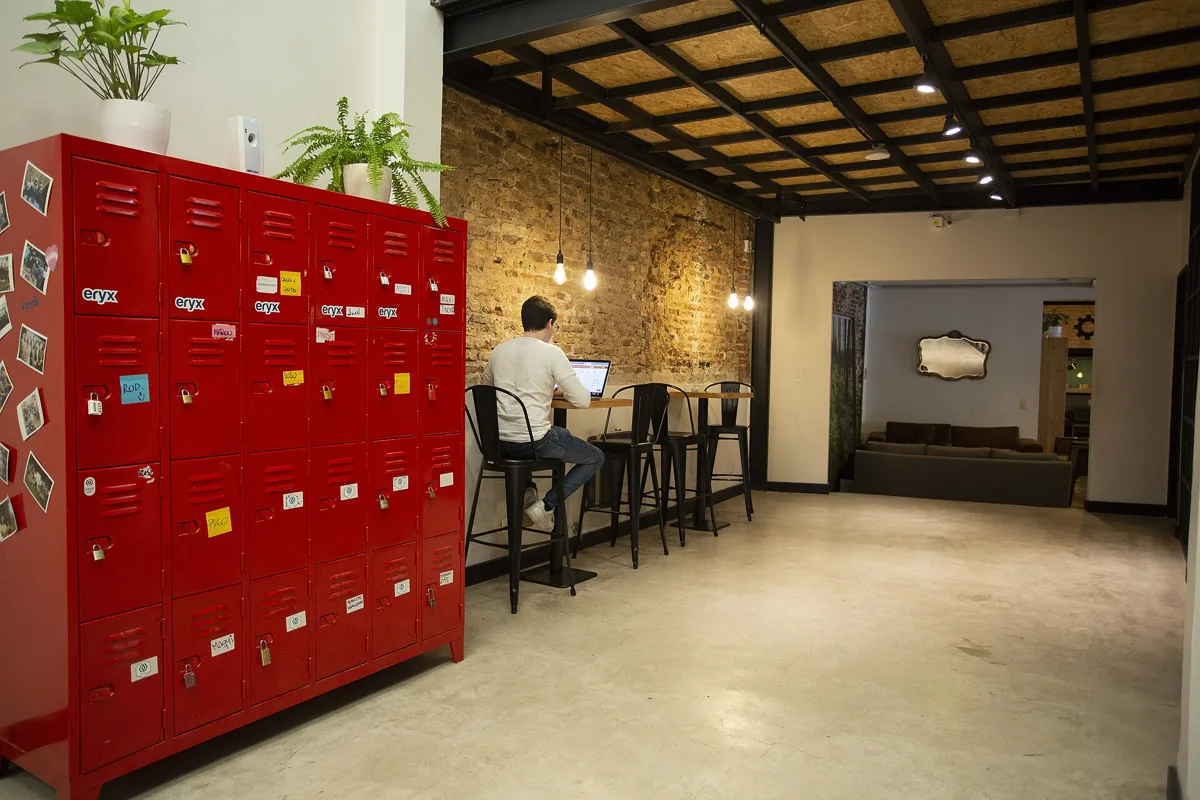
Coworking spaces cluster in Palermo, Villa Crespo, Recoleta and the business center, with day passes and monthly memberships. Many cafés are laptop-friendly in the mornings and afternoons; lunchtime and evenings are busier.
Money and payments
- Foreign Visa/Mastercard cards are widely accepted; Apple Pay/Google Pay work in many places.
- Since 2025 the official and "blue" exchange rates have largely converged, so card payments are no longer the bad deal they once were.
- Bring some clean US dollar bills — many short-term landlords accept cash dollars (always get a receipt).
Time zone and life
Argentina is on UTC−3 year-round (no daylight saving): convenient for New York mornings and European afternoons. Dinner starts late — 9 or 10 pm is normal — and the city stays awake.
Your first week
Get a local SIM or eSIM, a SUBE transport card and health insurance sorted — the full list is in our first-week checklist.
This article is for information only and is not legal advice. Rules in Argentina change often — check official sources before important steps.
 Planning a Move to Buenos Aires? How to Prepare Your Housing in Advance
 Moving to Buenos Aires With Kids: Neighborhood, Apartment, School
 Your First Week in Buenos Aires: A Relocation Checklist
 Dollar Rate in Argentina Today: Blue, Official and More