How to Rent an Apartment in Buenos Aires as a Foreigner
Renting in Buenos Aires is very doable without local contacts or fluent Spanish — but the rules are different from the US, UK or most of Europe. The biggest surprise for newcomers is the guarantee: for a regular lease, landlords almost always want a local co-signer or a lease-guarantee insurance policy. Here is the whole process, step by step.
- 1Format
Short-term first or straight to a long lease
- 2Area and budget
Compare neighborhood prices, add expensas
- 3Search
Map, no-guarantor collection, Telegram channel
- 4Guarantee
Seguro de caución or a short-term rental
- 5Documents
Passport, CUIL, proof of income
- 6Viewing
In person, by day and at night
- 7Lease
Currency, adjustments, deposit, termination
- 8Move in
Photos of the flat and the meters
Step 1. Pick the type of rental
Argentina has two very different rental markets:
- Short-term rentals (alquiler temporario) — one month to several months, furnished, often priced in US dollars. Usually no guarantor — a passport and a deposit are enough. More expensive per month, but you can move in within days.
- Long-term leases (alquiler tradicional) — typically one to three years, often unfurnished, usually priced in pesos with periodic inflation adjustments. Cheaper, but you need a guarantee and paperwork.
The most common expat strategy: start with 1–3 months of short-term rental, explore neighborhoods and sort out your paperwork, then switch to a long-term lease. See our short-term vs long-term comparison.
Step 2. Choose a neighborhood and budget
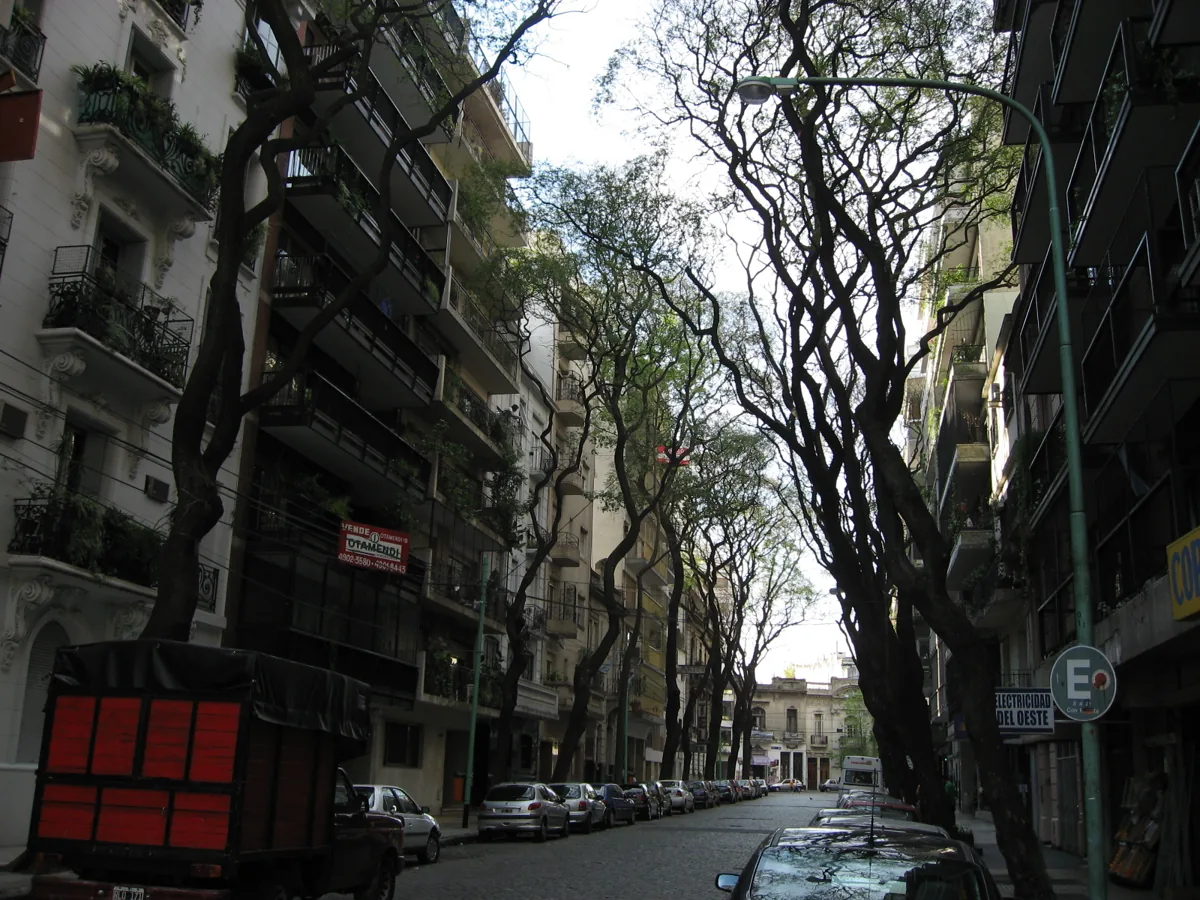
The city of Buenos Aires (CABA) has 48 neighborhoods with big price differences. Most newcomers choose the north and center: Palermo, Belgrano, Recoleta, Núñez, Colegiales, Villa Crespo, Almagro, Caballito. Read our neighborhood guide and check current median rents by neighborhood, calculated daily from live listings.
On top of rent you'll almost always pay expensas — the monthly building fee, sometimes 15–30% of the rent. We show it separately on every listing. All extra costs are covered in this guide.
Step 3. Where to search
- Big portals: Argenprop, Zonaprop, MercadoLibre Inmuebles — most of the supply, all in Spanish, mixed currencies.
- This site collects public listings in CABA, translates them into English and converts prices to USD at the blue rate. Start with no-guarantor listings and short-term rentals.
- Airbnb and similar — fine for the first weeks; monthly discounts can be significant.
- Facebook groups and chats — lots of offers and lots of scams. Read the rental scams guide before paying anything.
Step 4. Sort out the guarantee
For a long-term lease the landlord or agency will ask for one of:
- Garantía propietaria — a co-signer who owns property in Buenos Aires. Nearly impossible for newcomers.
- Seguro de caución — an insurer guarantees your lease; you pay for the policy (market estimates: roughly 3–7% of the total contract value). The realistic route for foreigners.
- Extra deposit or prepaying several months — sometimes accepted instead of a guarantee, purely by negotiation.
Details and insurer requirements: Renting without a guarantor.
Step 5. Prepare documents
- Passport (often all you need for short-term rentals).
- CUIL/CUIT — Argentine tax ID, obtainable without a DNI using your immigration paperwork.
- Proof of income — payslips, bank statements, client contracts. Caución insurers often want income of about three times the rent.
- For long-term leases, sometimes a DNI or at least a precaria (temporary residence certificate while your application is processed).
Step 6. View the apartment in person
Never pay for a place you (or someone you trust) haven't seen. When viewing, check water pressure and hot water (usually a gas heater — calefón — or tank — termotanque), heating and A/C, damp and mold in older buildings, and noise. Units facing the back (contrafrente) are quieter than street-facing ones (frente). Ask what the expensas have been over recent months.
Step 7. Read the contract and sign
Since the 2023 deregulation, landlord and tenant agree on term, currency, adjustment index and frequency, and deposit. Read every clause — use our lease checklist.
Agency fees in CABA: city law 5859 prohibits real estate agencies from charging the tenant a commission on residential leases — the landlord pays. If an agency asks you for "honorarios" on a standard long-term apartment lease in the city, push back.
Step 8. Move in
Photograph every room, appliance and wall on move-in day and send the photos to the agent in writing — it's your best protection when you ask for your deposit back. Utility bills usually stay in the owner's name; you just pay them.
Quick plan if you haven't arrived yet
- Book a short-term place for 1–2 months.
- In your first weeks get a SIM card, a way to pay in pesos and your CUIL — see the first-week checklist.
- Walk the neighborhoods you like.
- Get pre-approved for a seguro de caución and browse no-guarantor listings.
This article is for information only and is not legal advice. Rules in Argentina change often — check official sources before important steps.
 Renting Without a Guarantor: Seguro de Caución and Other Options
 Apartment Viewing Checklist: 25 Things to Check in Buenos Aires
 How to Negotiate Your Rent in Buenos Aires
 How to Get Your Deposit Back When You Move Out